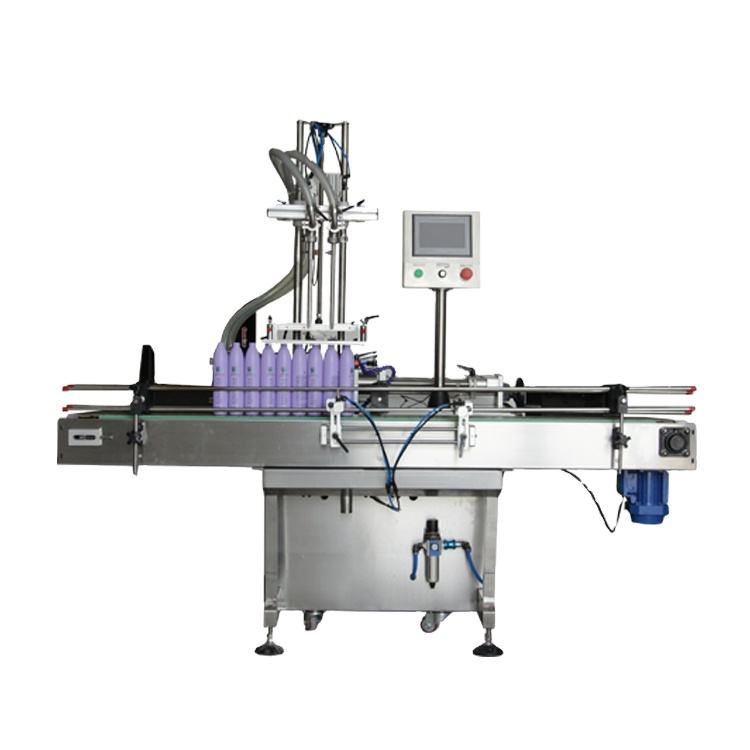
Riempitrice automatica a 2 ugelli
La riempitrice automatica a 2 ugelli è progettata per il riempimento preciso di liquidi a viscosità da sottile a media. Con un design lineare e compatto, fornisce prestazioni stabili e funzionamento efficiente per varie linee di produzione.
Costruita con un telaio in acciaio inossidabile 304 e parti a contatto per uso alimentare, la macchina è dotata di doppi ugelli di riempimento, controllo PLC e un'interfaccia touchscreen per un facile utilizzo e una regolazione accurata del riempimento.
È ampiamente utilizzato nell'industria alimentare, cosmetica, farmaceutica, della cura della persona e chimica. Sono disponibili configurazioni opzionali per ambienti di produzione sanitari, corrosivi o infiammabili.
Caratteristiche principali
1. Realizzato in resistente acciaio inossidabile 304, con parti a contatto con liquidi in acciaio inossidabile 316L per una maggiore igiene e resistenza alla corrosione.
2. I materiali di contatto come Teflon, Viton e tubi flessibili possono essere personalizzati in base ai requisiti del prodotto.
3. Dotato di un sistema di controllo PLC e senza bottiglia, nessuna funzione di riempimento per un funzionamento affidabile.
4. Gli ugelli di riempimento sono dotati di design antigoccia e spegnimento automatico per un riempimento pulito di liquidi viscosi.
5. Elevata precisione di riempimento entro ± 1%, con funzione di conteggio delle bottiglie integrata.
6. Progettazione di facile manutenzione senza la necessità di strumenti speciali.
7. Sono disponibili guarnizioni e tubi flessibili speciali opzionali per applicazioni con liquidi corrosivi.
8. Gli ugelli subacquei possono essere configurati per il riempimento dal basso verso l'alto di prodotti schiumogeni.
9. Il sistema di posizionamento della bottiglia garantisce un preciso allineamento del riempimento.
Parametro principale
|
|
Velocità
|
450-1500 bottiglie/ora
|
|
|
Intervallo di riempimento
|
100ml-500ml,100ml-1000ml,1000ml-5000ml
|
|
|
Precisione della misurazione
|
±1%
|
|
|
Potenza di lavoro
|
220 V CA
|
|
|
Pressione dell'aria
|
6~8㎏/㎝²
|
|
|
Consumo d'aria
|
1 m³/min
|
|
|
Tasso di potenza
|
0,8 kW
|
|
|
Potenza degli altri dispositivi
|
7,5 kW (compressore d'aria)
|
|
|
Peso netto
|
320Kg
|
Dettagli del prodotto
Principio di funzionamento
1.Dopo l'avvio del sistema di riempimento automatico, le bottiglie vuote vengono trasportate alla stazione di riempimento e rilevate da sensori fotoelettrici. Una volta raggiunto il numero di bottiglie preimpostato, il sistema di bloccaggio bottiglie posiziona accuratamente i contenitori. Gli ugelli di riempimento scendono quindi e iniziano a riempirsi automaticamente. Una volta completato il riempimento, gli ugelli si sollevano, i bloccabottiglie si rilasciano e le bottiglie riempite si spostano alla stazione successiva. Il sistema ripete continuamente questo processo per garantire un funzionamento stabile, efficiente e affidabile. Per requisiti di precisione più elevati è possibile configurare anche una funzione di riempimento secondaria.
2.Durante il funzionamento, il sensore del livello del liquido monitora continuamente il livello del prodotto all'interno del serbatoio di stoccaggio. Il PLC controlla automaticamente il sistema di alimentazione del liquido per mantenere un livello del liquido stabile, garantendo prestazioni di riempimento costanti e accurate durante tutta la produzione.
Domande frequenti sulla riempitrice a 2 ugelli
Perdita di materiale dalla parte posteriore del cilindro (area dello stelo del pistone): come risolverla?
Questo è un problema comune in double-headmacchine riempitrici a pistoneed è solitamente causato dai seguenti motivi:
1.Guarnizioni pistone usurate:
Anelli di tenuta danneggiati o usurati possono causare perdite di prodotto tra il pistone e la parete del cilindro, consentendo al materiale di fluire verso il lato posteriore del cilindro.
Soluzione: Rimuovere il pistone e sostituire gli anelli di tenuta.
2. Collegamento allentato tra pistone e stelo:
Se il pistone non è fissato saldamente allo stelo, potrebbero verificarsi perdite durante il funzionamento.
Soluzione: controllare e serrare il collegamento del pistone.
3. Disallineamento del cilindro:
Se il cilindro del prodotto non è centrato correttamente sul telaio di supporto, le prestazioni di sigillatura potrebbero risentirne.
Soluzione: reinstallare e allineare correttamente il cilindro.
Perché l'ugello di riempimento continua a gocciolare dopo il riempimento?
Il gocciolamento degli ugelli è uno dei problemi più comuni delle riempitrici. Di seguito le principali cause e soluzioni:
1.Componenti di tenuta usurati:
L'anello di tenuta o la guarnizione all'interno dell'ugello potrebbero essere usurati e non riuscire a chiudersi ermeticamente.
Soluzione: sostituire le guarnizioni danneggiate.
2.Temporizzazione chiusura ugello errata:
Se il ritardo di chiusura dell'ugello viene impostato troppo tardi, il prodotto residuo potrebbe continuare a gocciolare.
Soluzione: regolare il parametro del ritardo di chiusura dell'ugello nel sistema di controllo.
3.Prodotto residuo rimasto sulla punta dell'ugello:
I prodotti viscosi potrebbero attaccarsi all'uscita dell'ugello dopo il riempimento.
Soluzione: utilizzare una riempitrice dotata di funzione di risucchio, che riporta il prodotto residuo nell'ugello dopo il riempimento.
4.Apertura dell'ugello usurata o danneggiata:
Un'apertura dell'ugello maggiore di 7,5 mm o una superficie di tenuta irregolare possono impedire una corretta chiusura.
Soluzione: riparare o sostituire l'ugello e lucidare la superficie di tenuta, se necessario.
5.Utilizzare ugelli antigoccia:
Per prodotti oleosi o ad alta viscosità, si consiglia vivamente di utilizzare ugelli antigoccia o di intercettazione per ridurre al minimo le perdite e migliorare la pulizia del riempimento.

 Il tuo messaggio deve contenere da 20 a 3000 caratteri!
 english
 français
 Deutsch
 Italiano
 Русский
 Español
 português
 Nederlandse
 ελληνικά
 日本語
日本語
 한국
한국
 العربية
 हिन्दी
 Türkçe
 indonesia
 tiếng Việt
 ไทย
ไทย
 বাংলা
বাংলা
 فارسی
فارسی
 polski